BTN News Aggregator Design
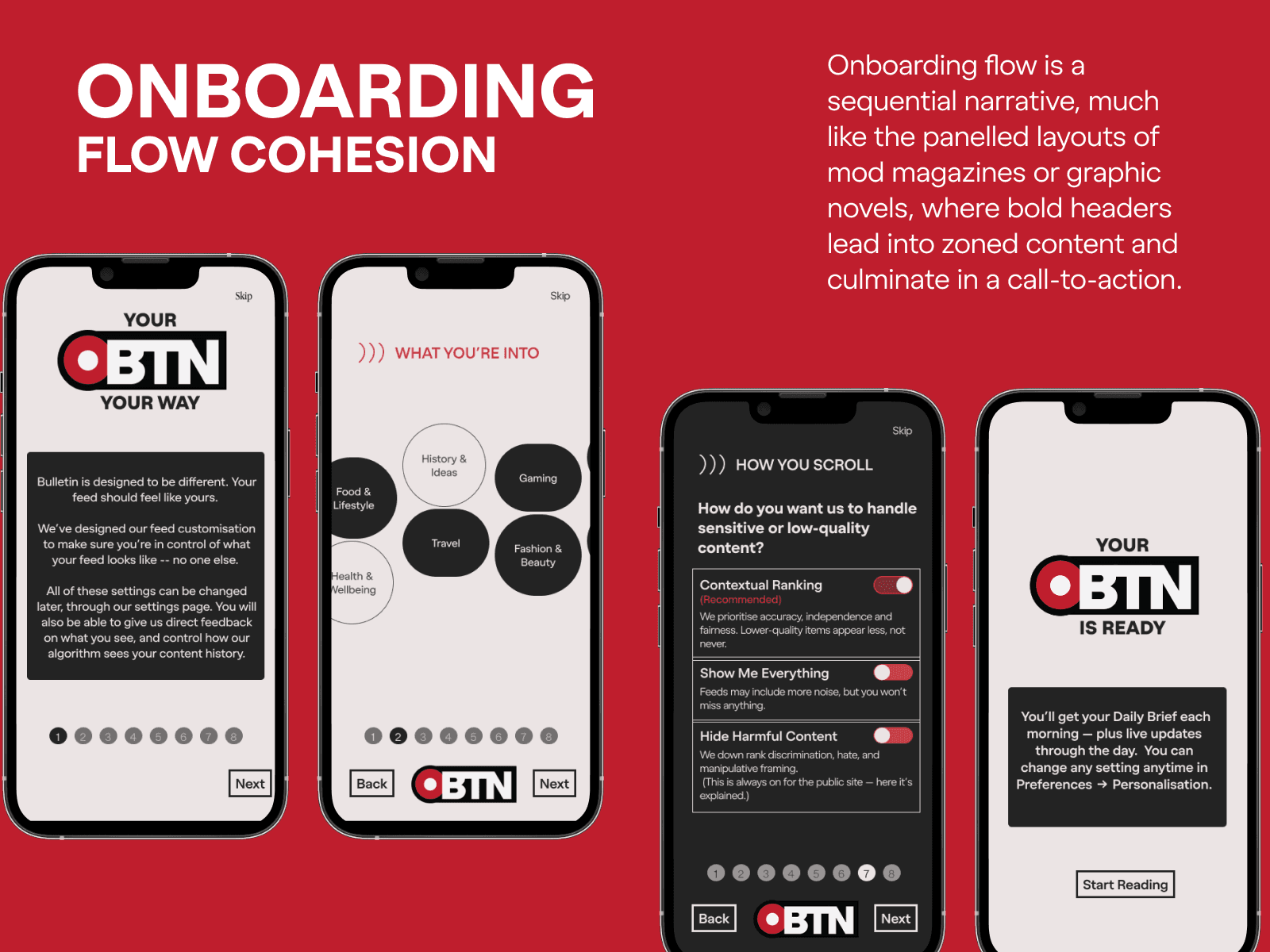
A news aggregator for independent UK media, designed to refuse the scroll-and-reward logic of mainstream platforms.
Year:
2026
Category:
Interaction Design
/
Visual Design

Socio-technical Niche Mapping
UK independent media has a distribution problem that isn't really about reach. The aggregators that exist either flatten everything into one algorithmic feed or just replicate the platform logic publishers are trying to get away from.
The dominant UI grammar — infinite scroll, intermittent reward, optimised session length — is structurally hostile to the kind of slow, loyal readership independent media needs to survive. You can't fix that with better content recommendations.
The interface itself has to ask something different of the reader.
Co-Ideation
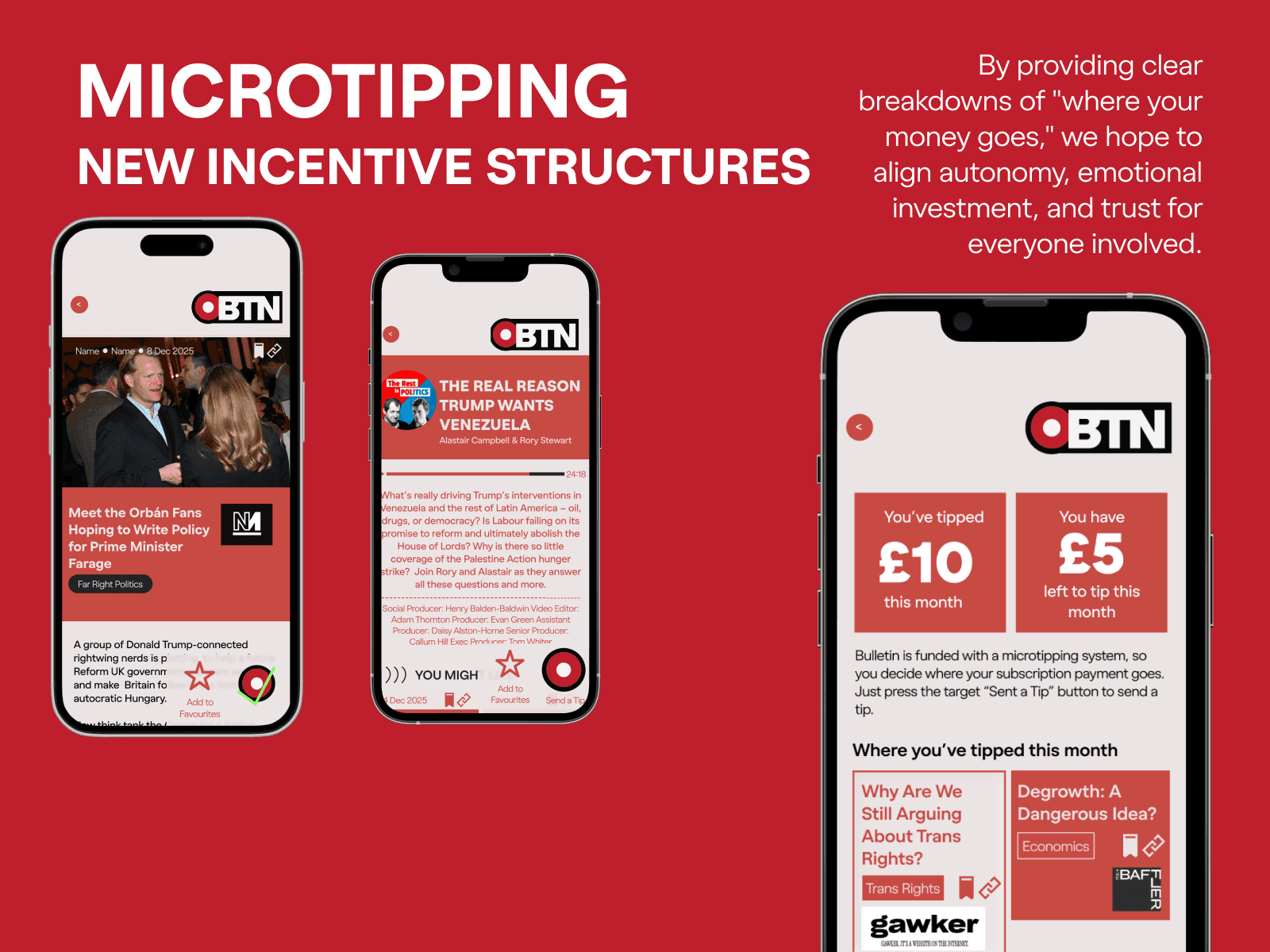
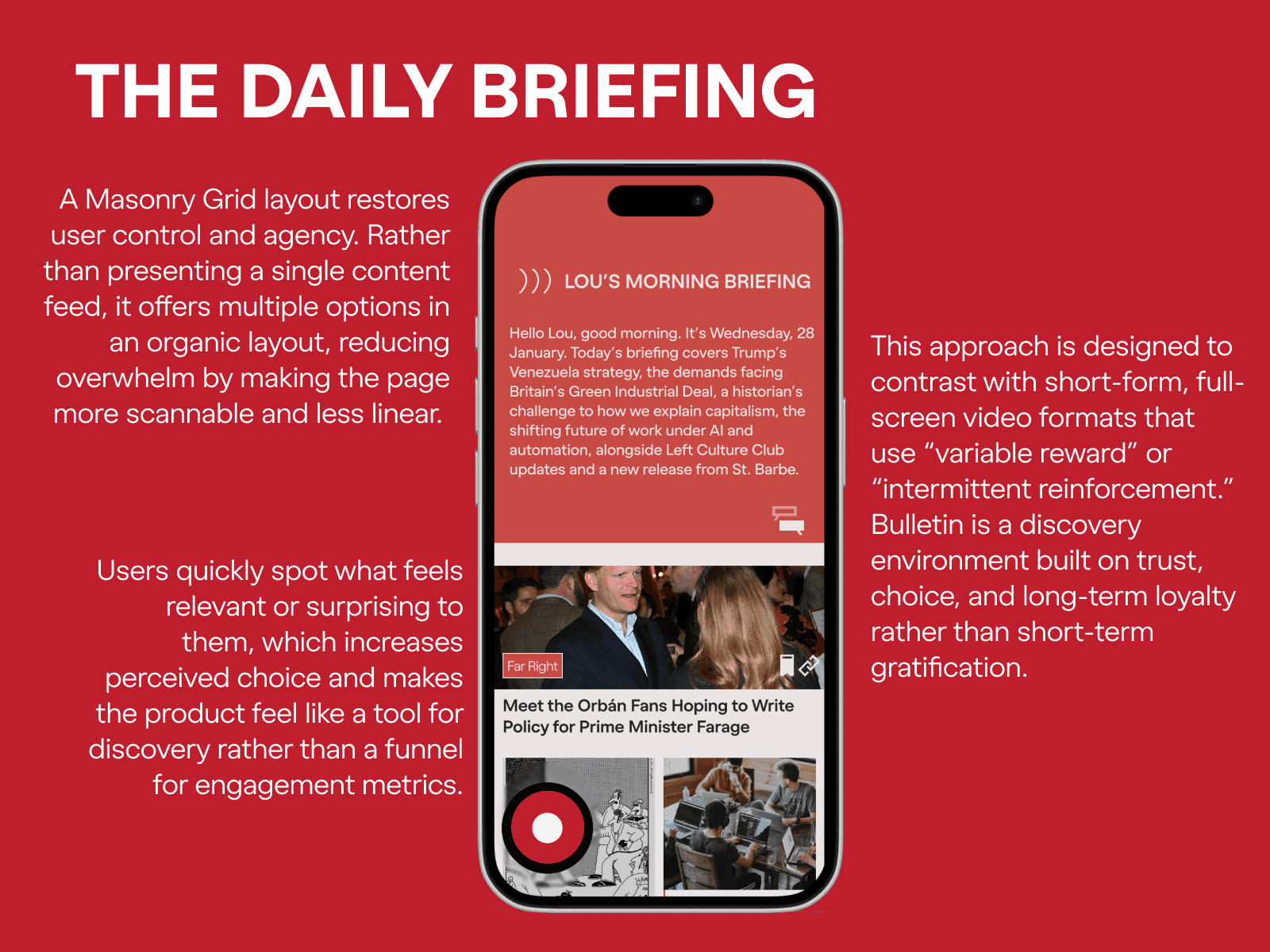
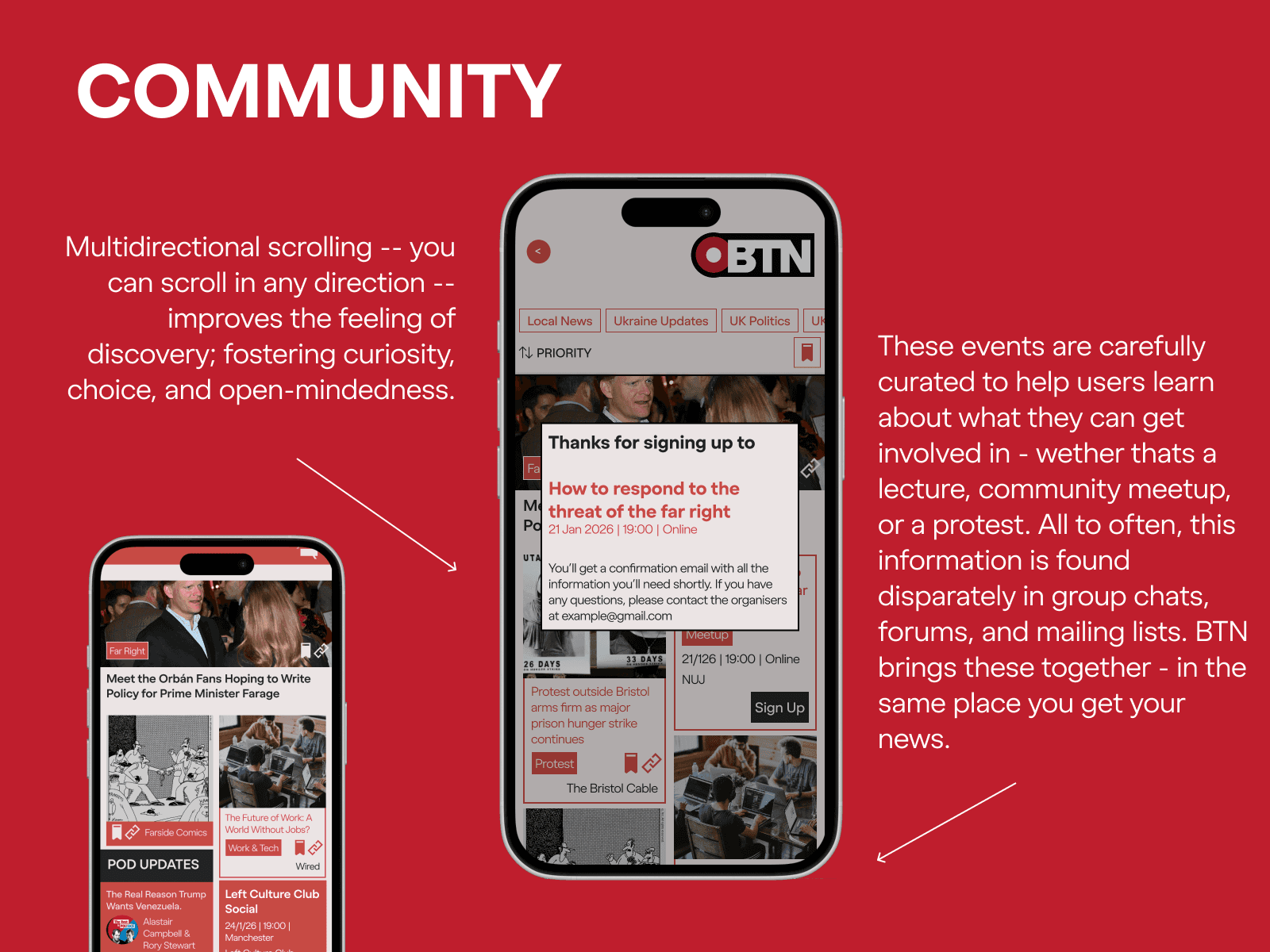
Mod as a subculture has a precise, legible grammar, and that turned out to be genuinely useful as a design constraint, not just a reference. The question the interface puts to the reader changes from what's next if you keep going to what do you actually want to read. The palette — red, black, white — is functional. In a landscape of beige wellness UIs it signals that you're in a space for sharp reading, not soothing distraction.
Strategy & Opportunties
What this demonstrates isn't specific to Bulletin. There's a whole category of media infrastructure — public interest, independent, subscription-based — where the interface is working against the product's actual values.
The design language here is replicable as a strategic position: subculture as control system, layout as behaviour constraint. The opportunity is for organisations that already know they don't want to be addictive but haven't figured out how to make that structurally legible in the product rather than just stated in the about page.
Ongoing Work
If you’re trying to build media infrastructure that doesn’t just “do engagement better,” but actually encodes different incentives into the interface, this is the level I work at: subculture as control system, layout as behaviour constraint, and design as a way to make your politics structurally legible.